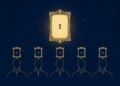
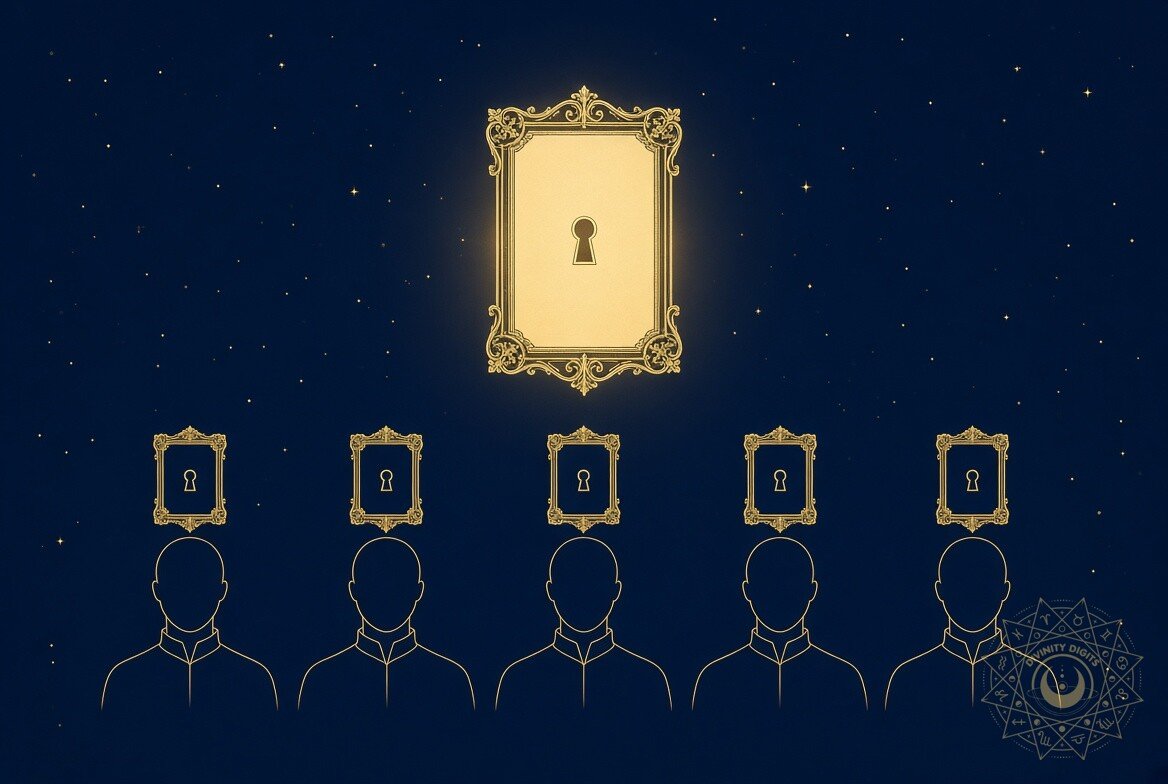
In 1948, the psychologist Bertram Forer gave 39 students a personality test, then handed each one a typed profile of themselves a week later. The students rated it 4.26 out of 5 for accuracy. Every profile was identical, and Forer had built it from a newsstand astrology book. That result is the diagnostic file for every horoscope, tarot spread and numerology report that has ever made you think “that is exactly me.” This guide covers how the effect works, where it shows up, and five checks that separate a reading from a guess.
Try it yourself: take the free Barnum Test. It takes about a minute, and nothing you enter is stored.
The Mechanics: Why a Vague Statement Feels Personal
A Barnum statement sounds specific and fits nearly everyone. Forer’s profile opened with a need to be liked and admired, a habit of self-criticism, and unused potential. Check those three against yourself. Most people pass.
Three mechanics do the work:
- Breadth. The statement covers something almost everyone feels, such as wanting approval or doubting a past decision.
- Both sides. The statement names a trait and its opposite: at times outgoing, at other times reserved. Whatever you were last week, one half fits.
- Flattery. “Unused potential” is a compliment dressed as a diagnosis, and a compliment is easy to accept.
The reader then does the extraction. A vague statement leaves room to search memory for a moment that fits, and a matching memory feels like proof.
Forer called his finding the fallacy of personal validation. He ran the test in 1948 and published it in 1949. The name “Barnum effect” came later, from the psychologist Paul Meehl in 1956, in an essay titled “Wanted: A Good Cookbook”. Meehl was aiming at clinical personality reports, not horoscopes. He borrowed the name from the showman P. T. Barnum, who is credited with saying he had something for everybody, though that attribution is often described as possibly apocryphal.
Macroscopic Symptoms: Where the Effect Shows Up
- 1948, the classroom. Forer’s 39 students rated one shared profile at 4.26 out of 5, which is about 85 percent. Sources that track later repeats report averages near 4.2 across hundreds of repeats.
- 1956, the clinic. Meehl named the effect to criticise personality reports that seemed to work only because their statements were trivial.
- 1977, the reading room. Ray Hyman’s article on cold reading in Skeptical Inquirer described how a reader convinces a stranger that they know everything about them.
- 1985, the double-blind test. Shawn Carlson published a double-blind test of astrology in Nature. In one part, 83 volunteers each received three chart readings, one built from their own birth data, and picked their own in 28 cases, about the one in three expected by chance. In the other part, 28 astrologers matched birth charts to personality profiles for 116 volunteers and, by Carlson’s analysis, did no better than chance. A 2009 reanalysis by Suitbert Ertel disputed that analysis and argued for marginally better than chance matching, so the result remains contested.
The contrast is the diagnostic: feeling accurate and being checkable are two different measurements. A general text scored high on feeling. When readings had to commit to specifics under blind conditions, the picture changed.
The Five-Point Binary Grid
Run any reading through this operational grid. Each row has two outcomes.
| Check | Barnum reading | Testable reading |
|---|---|---|
| Scope | Fits nearly anyone | Fits some people and not others |
| Direction | Covers both sides of a trait | Commits to one side |
| Tone | Flattering throughout | Includes unflattering specifics |
| Detail | You supply the details | The reading supplies names, dates or numbers |
| Swap | Still fits a stranger | Fails for a stranger |
Four or five entries in the left column means the reading carries no information about you in particular.
Recorded Symptoms
These two vignettes are illustrative composites, not real cases.
Recorded Symptom 1. A reader opens a daily horoscope that says a hidden strength will be tested before evening. At 4 p.m. a colleague asks for help with a spreadsheet, and she files it as a hit. The statement never named a person, a place or a task, so almost any event would have qualified.
Recorded Symptom 2. A tarot spread returns the Two of Swords, commonly read as indecision. The querent names a house move, a job offer and an unanswered message in the same minute, and each one fits. Three possible hits from one card is the systemic friction between a reading and a test: nothing in the card could have been wrong.
Insulation Protocols: Five Checks Before You Believe a Reading
- Swap test. Put a stranger’s name on the reading, or read it to someone with a different sign. If it still fits, it is a Barnum statement.
- Flip test. Reverse the statement. “You are sometimes shy” becomes “you are sometimes bold.” If both feel true, the statement tells you nothing.
- Specifics test. Look for a line that could be proved wrong: a date, a number, a named event. Watch for readings made entirely of lines that cannot be wrong.
- Scorecard. Write down every prediction-like line, then mark hits and misses at the end of the week. Count both columns.
- Containment. Treat the reading as a prompt for reflection, not a forecast. Make no money, health or relationship decision from it alone.
A reading that commits to something carries kinetic energy, because it can be proved wrong. A reading that commits to nothing cannot.
Divinity Digits describes what each tradition says about a sign, a number or a card. No study shows that a birth date, a name or a drawn card predicts personality or events.
FAQ
Does the Barnum effect prove astrology is false?
No. It shows that a feeling of accuracy is not evidence. Testing under blind conditions is what produces evidence, and the Carlson test above is the best-known attempt, with a published dispute over its analysis.
Is a Barnum statement always untrue?
No. It is usually true of most people, which is why it feels right and tells you little.
Do the sign descriptions on this site use Barnum statements?
Many traditional sign descriptions are broad by nature. Read them as symbolism, which is how our Cancer spirit animals and Aquarius man guides label them, and apply the five checks to anything you read here or elsewhere.
Can a reading still be useful?
Yes, as a reflection prompt. A card or a sign gives you a question to ask yourself. The answer comes from you, not from the card.
Aftermath
The Barnum effect is not a flaw in gullible people. It is how a mind completes a vague description. Once you know the mechanism, you can use readings for reflection and keep your decisions on checkable ground. For a traditional starting point, see our History of Tarot.
External Data Check
Forer’s result converts to about 85 percent accuracy from a text written for nobody. A service that quotes a similar accuracy figure without a swap test may only be measuring the Barnum effect.
Discover more from Divinity Digits
Subscribe to get the latest posts sent to your email.